The Equinox Angkor is one of the most popular events

The Equinox Angkor is a special solar phenomenon that occurs twice a year at Angkor Wat in Cambodia. The first event, called the Vernal Equinox, typically occurs between March 21st and 23rd from 5:00 AM to 6:30 AM. The second event, known as the Autumnal Equinox, usually takes place in September.

The Equinox Angkor is one of the most popular events, attracting tourists from around the globe as well as local Cambodians. During these events, thousands of visitors gather in front of the western entrance of the Angkor Wat temple, waiting to witness and capture photos of the breathtaking sunrise.

Related Blog

Discover true relaxation and rejuvenation at Nibi Spa, a hidden sanctuary in the peaceful town of Kampot where natural beauty and tranquility come together to create an unforgettable wellness experience. Designed to refresh both body and mind, Nibi Spa offers a serene environment inspired by nature, with soothing music, gentle lighting, and aromatic scents that instantly calm your senses. Each treatment is thoughtfully crafted to promote healing, balance, and inner peace using high-quality natural products and traditional techniques. Guests can choose from a wide range of massages — from the classic Khmer traditional massage to aromatherapy and deep tissue options — all performed by professional and attentive therapists dedicated to ensuring your complete comfort.

At Nibi Spa, it’s not just about relaxation; it’s about renewal. The spa’s holistic approach focuses on relieving stress, improving circulation, and enhancing overall well-being. Whether you’ve spent the day exploring Kampot’s scenic countryside, the majestic Bokor Mountain, or the tranquil riverside, a visit to Nibi Spa provides the perfect way to unwind and restore your energy. Couples can also indulge in special treatments designed to create moments of connection and serenity. With its peaceful ambiance, warm hospitality, and dedication to quality care, Nibi Spa stands out as one of Kampot’s most cherished wellness destinations. Step inside, leave your worries behind, and let Nibi Spa take you on a soothing journey that refreshes your body, awakens your spirit, and renews your sense of balance in the heart of Kampot.

Located along the River about 11 km from Sokchea Kampot Hotel.

Operation Hours: 9:00 AM9:30 AM, or 10:00 AM Tuesday to Friday
Reservation contact +855 (0)16460110

We are incredibly honored to receive the Travelers Review Award 2025 from Booking.com! This recognition is a true testament to the dedication of our team at Sokchea Kampot Hotel and, most importantly, to the trust and support of our wonderful guests. We sincerely thank each and every guest who took the time to share their experiences and reviews on Booking.com. Your kind words and valuable feedback inspire us to continuously improve and provide the best hospitality possible.

At Sokchea Kampot Hotel, we are committed to offering warm and welcoming stays, ensuring every guest enjoys a peaceful retreat by the beautiful riverside of Kampot. Whether you visit for a romantic getaway, a family vacation, or simply a relaxing escape, we take great pride in delivering exceptional service and unforgettable moments.

This award motivates us to strive for even greater excellence in the years to come. Thank you again to Booking.com for this prestigious recognition and to all our guests for making this achievement possible. We look forward to welcoming you again soon and creating more memorable experiences together!

Travelers Review Award

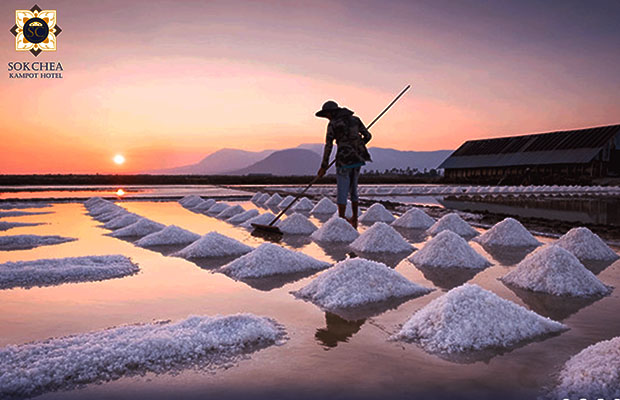
The Kampot Salt Fields are located in Kampot Province, Cambodia, near the coastal town of Kampot and the neighboring province of Kep. These salt fields are renowned for their traditional salt production methods, which have been passed down through generations.

The salt fields are typically made up of vast expanses of shallow, rectangular basins filled with seawater. The process of salt production begins during the dry season when the seawater is directed into the basins through a series of canals and channels. As the water evaporates under the hot sun, it leaves behind a layer of salt crystals on the basin’s surface.

Workers then carefully rake the salt crystals from the basins and pile them up to dry further in the sun. Once dried, the salt is collected, sorted, and packed for distribution to local markets or for export.

Visitors to the Kampot Salt Fields can observe this traditional salt-making process and learn about the significance of salt production in the region’s economy and culture. The salt fields also offer picturesque views, especially during sunrise and sunset, making them a popular destination for tourists exploring the Kampot Province. Additionally, many tours in the area include visits to the salt fields as part of their itinerary, providing visitors with insight into Cambodia’s rural life and traditional industries.

អាណាចក្រខ្មែរ គឺ ជា សម័យ មួយ ដែល មាន ភាពរុងរឿង បំផុតក្នុងប្រវត្តិសាស្ត្ រជាតិខ្មែរ។ ដោយសារ ហេតុដែលខ្មែរមានដែនដីធំធេង និងវិសាលភាព យ៉ាងច្រើន អាណាចក្រខ្មែរ ត្រូវបានហៅថា “មហាអាណាចក្រខ្មែរ”។ ប្រវត្តិសាស្ត្រ របស់អាណាចក្រ នេះត្រូវបានចងក្រង និងរក្សាទុកតាមរយៈសិលាចារឹក និងសាស្ត្រាស្លឹករឹត។

សាស្ត្រាស្លឹករឹត គឺជាគម្ពីរ ឬ អត្ថបទបុរាណដែលត្រូវបានចារនៅលើស្លឹករឹត។ ស្លឹករឹតគឺជាស្លឹករបស់ដើមទ្រាំង ដែលមានប្រភពមកពីភាគខាងកើត និងខាងជើងនៃប្រទេសឥណ្ឌា និងស្រីលង្កា។ នៅក្នុងតំបន់អាស៊ីអាគ្នេយ៍ ដើមទ្រាំងនេះអាចរកឃើញនៅប្រទេសកម្ពុជា ថៃ និងភូមា។ នៅប្រទេសកម្ពុជា ដើមទ្រាំងមានច្រើននៅខេត្តក្រចេះ និងកំពង់ធំ។

សម្ដេចព្រះសង្ឃរាជ ជួនណាត បានពន្យល់ថា ពាក្យ “សាស្ត្រា” ក្នុងភាសាបាលី និងសំស្ក្រឹត មានន័យថា ក្បួនច្បាប់ ឬ សេចក្តីដឹង ដែលពាក់ពន្ធ័ទៅនឹងចំណេះដឹង វិទ្យាសាស្ត្រ សាសនា ច្បាប់ និងទ្រឹស្តីអំពីជីវិត។ អ្នកស្រាវជ្រាវខ្លះទៀតក៏បានរៀបរាប់ថា សាស្ត្រាស្លឹករឹតមានកំណើតចាប់ពីសម័យអង្គរ។

សាស្ត្រាស្លឹករឹត ត្រូវបានផ្សព្វផ្សាយដល់ប្រជាជនខ្មែរយ៉ាងទូលំទូលាយ នៅសម័យកាលមុនៗ ហើយត្រូវបានប្រើប្រាស់ជាប្រចាំ។ ប៉ុន្តែពេលកន្លងមក វប្បធម៌សិលាចារឹក និងសាស្ត្រាស្លឹករឹតក៏បានរលាយបាត់បង់បន្តិចម្តងៗ ដោយសារអវត្តមាននៃការរក្សាទុក និងការចែកចាយខ្វះខាត។

សព្វថ្ងៃ សាស្ត្រាស្លឹករឹតភាគច្រើន ត្រូវបានរក្សា និងប្រើប្រាស់នៅតែក្នុងវត្តអារាមប៉ុណ្ណោះ ដូច្នេះ វាក៏មានហានិភ័យបាត់បង់បន្តិចម្តងៗ ផងដែរ។ បណ្តាលមកពីការរីកចម្រើននៃបច្ចេកវិទ្យាទំនើប ដែលរំពឹងឱ្យប្រើសៀវភៅ ឬវិធីសាស្ត្រឌីជីថលជំនួស។

សរុបមក សាស្ត្រាស្លឹករឹតគឺជាទ្រព្យសម្បត្តិបុរាណដ៏មានតម្លៃ ដែលបង្ហាញពីភាពចម្បងនៃវប្បធម៌ និងស្មារតីដ៏ខ្ពង់ខ្ពស់របស់ជាតិខ្មែរ។ វាអាចជាគម្ពីរសាសនា ឬឯកសារដែលរៀបរាប់អំពីពង្សាវតារនៃប្រទេសខ្មែរយើងផងដែរ។

The Khmer Empire was one of the most glorious periods in Cambodian history. Due to the vast territory under Khmer control, it earned the title of the “Great Khmer Empire.” This rich history has been recorded and preserved through stone inscriptions and Sastra Slëk Rëet (palm-leaf manuscripts).

What is Sastra Slëk Rëet made from?
Sastra Slëk Rëet refers to ancient texts inscribed on palm leaves, specifically the leaves of the T’rang tree (Corypha palm). This tree originates from the eastern and northern parts of India and Sri Lanka. In Southeast Asia, the T’rang tree can be found in countries like Cambodia, Thailand, and Myanmar. In Cambodia, the tree is mostly found in Kratie and Kampong Thom provinces.

According to Samdech Preah Sangharaja Chuon Nath, the word Sastra in Pali and Sanskrit means “doctrine,” referring to knowledge, sciences, religion, law, and philosophies about life. Some scholars have stated that Sastra Slëk Rëet dates back to the Angkor period.

These palm-leaf manuscripts were widely shared among Khmer people in the past and used over many generations. However, as time went on, both the tradition of stone inscriptions and the use of palm-leaf manuscripts have gradually faded. Today, Sastra Slëk Rëet is mostly preserved and used only within Buddhist pagodas. As a result, it is slowly being lost due to the rise of modern technology such as printed books and digital formats.

In conclusion, Sastra Slëk Rëet is a valuable cultural heritage of the Khmer people. These texts, written on palm leaves, include religious scriptures and historical records that reflect the wisdom and identity of the Khmer civilization.

#at Sokchea Angkor Hotel Lobby

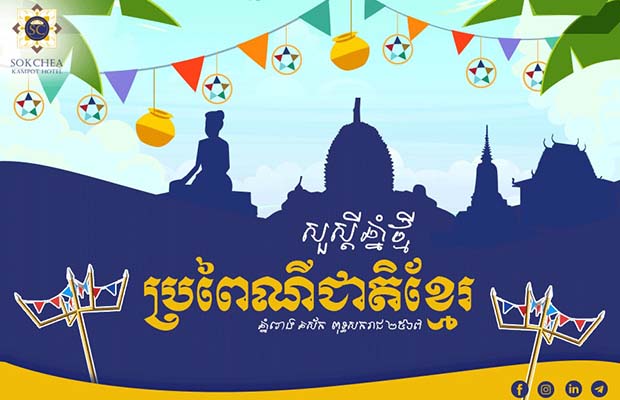
Khmer New Year, also known as “Choul Chnam Thmey,” meaning entering the new year, is a national holiday hosted by Cambodians annually. It is the season when Cambodians have free time from harvesting rice and other agricultural commodities. The event is Cambodia’s largest event and lasts three days, on the 13th, 14th, or 15th of April (in a specific year, it could be on the 14th to 16th of April).

Cambodian New Year is celebrated just like other Asian New Year Festivals that blend history with religious practices, emphasizing and commemorating the seniors and ancestors. While there are merriments with traditional meals and beverages, the three days are packed with Buddhist compliance centered on performing gratitude, sending offerings to deceased family members, and contributing to those in need. The following preparations are exclusively made for the Khmer New Year.

Nestled in southern Cambodia, Kampot is a serene province celebrated for its unspoiled natural beauty. Framed by rolling mountains, tranquil rivers, and golden sunsets, this charming town offers an ideal escape for nature lovers and adventure seekers alike. Its peaceful rhythm and stunning scenery make Kampot one of Cambodia’s most captivating destinations.

The Kampot River is the lifeblood of the region, winding gracefully through lush greenery and traditional villages. Visitors can enjoy boat cruises at sunrise or sunset, kayak along the gentle current, or simply relax on the riverbanks while watching local fishermen at work. The calm waters reflect the changing colors of the sky, creating a scene of pure tranquility.

Towering over the landscape is Bokor Mountain, a must-visit for its cool climate and panoramic views. The mountain’s winding roads lead to hidden waterfalls, misty forests, and the famous Bokor Hill Station—an old French colonial site that offers both history and breathtaking scenery. Nature enthusiasts can also spot diverse wildlife and enjoy peaceful hiking trails through the national park.

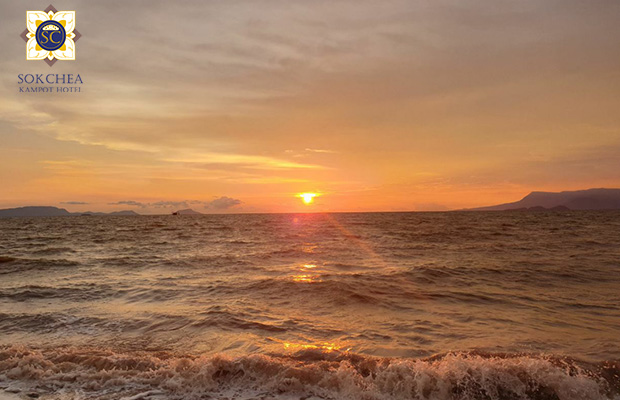
As the day fades, Kampot’s sunsets paint the sky in brilliant shades of orange, pink, and purple. The best viewing spots are along the river or from the hilltops, where the horizon stretches endlessly.

From shimmering rivers to majestic mountains and unforgettable sunsets, Kampot’s natural wonders invite visitors to slow down, explore, and reconnect with nature’s simple beauty.