Boat Trips on the Kampot River: A Must-Do Activity

Boat trips on the Kampot River are one of Cambodia’s most memorable travel experiences, offering a peaceful escape into nature and a unique perspective on the region’s charm. The river winds gently past lush mangroves, small fishing villages, and the picturesque Bokor Mountain range, creating a breathtaking backdrop for any journey. Whether you choose a lively sunset cruise or a quiet morning ride, the Kampot River promises an atmosphere that is both serene and captivating.
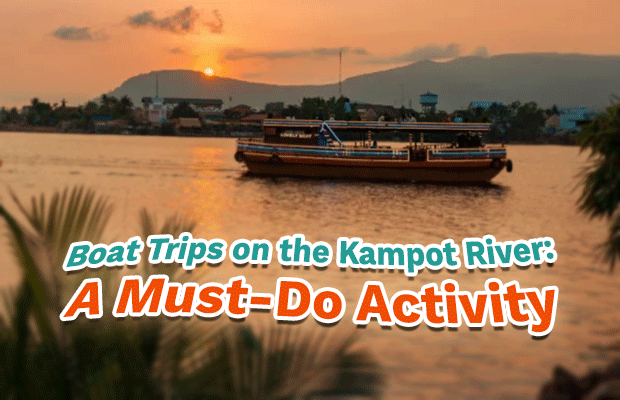
Sunset cruises are especially popular, and for good reason. As the sun dips behind the mountains, the water glows with shades of gold, pink, and purple. Travelers often find themselves relaxing on deck, enjoying cool breezes and listening to the soft hum of the boat while watching fireflies twinkle along the riverbanks. Many tours offer local drinks or snacks, adding an extra layer of comfort and enjoyment to the experience.

Morning boat trips, on the other hand, highlight Kampot’s peaceful side. The stillness of the river at dawn, coupled with birdsong and the sight of fishermen beginning their day, creates a calming and authentic glimpse into rural Cambodian life. Some tours even allow for kayaking or swimming, giving visitors a more interactive way to enjoy the river.

Ultimately, a Kampot River boat trip is more than just a leisure activity—it is a chance to connect with the natural beauty and gentle rhythms of one of Cambodia’s most scenic regions. For any traveler, it is truly a must-do experience.
Related Blog

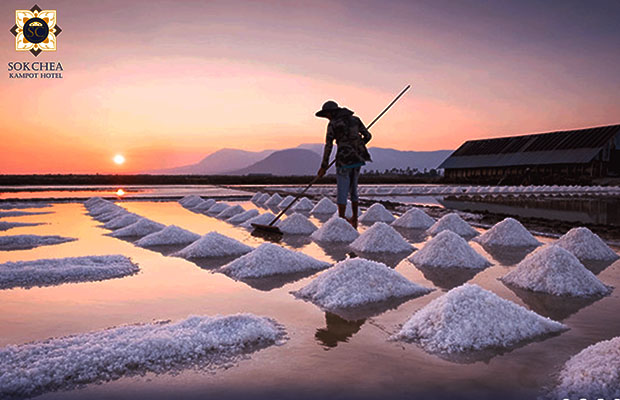
The Kampot Salt Fields are located in Kampot Province, Cambodia, near the coastal town of Kampot and the neighboring province of Kep. These salt fields are renowned for their traditional salt production methods, which have been passed down through generations.

The salt fields are typically made up of vast expanses of shallow, rectangular basins filled with seawater. The process of salt production begins during the dry season when the seawater is directed into the basins through a series of canals and channels. As the water evaporates under the hot sun, it leaves behind a layer of salt crystals on the basin’s surface.

Workers then carefully rake the salt crystals from the basins and pile them up to dry further in the sun. Once dried, the salt is collected, sorted, and packed for distribution to local markets or for export.

Visitors to the Kampot Salt Fields can observe this traditional salt-making process and learn about the significance of salt production in the region’s economy and culture. The salt fields also offer picturesque views, especially during sunrise and sunset, making them a popular destination for tourists exploring the Kampot Province. Additionally, many tours in the area include visits to the salt fields as part of their itinerary, providing visitors with insight into Cambodia’s rural life and traditional industries.

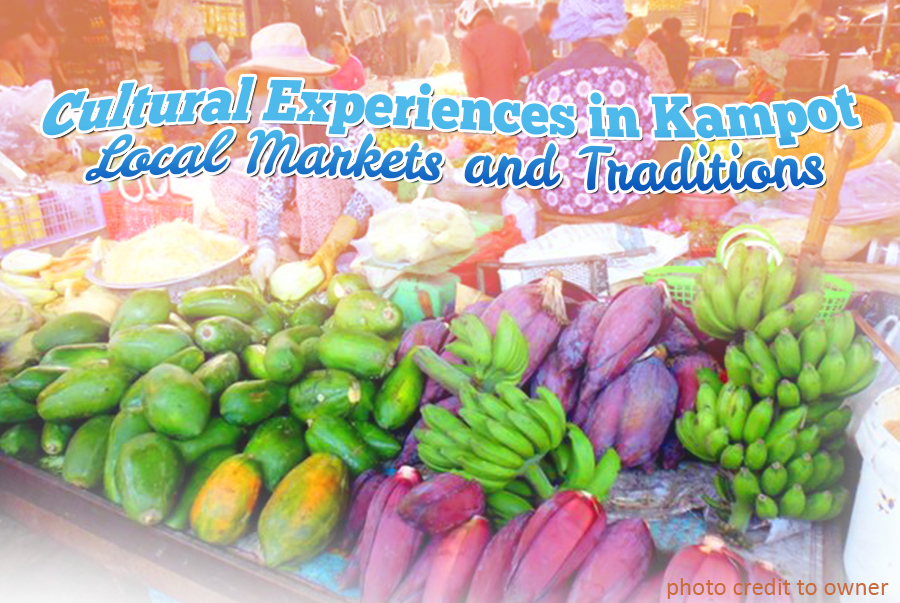
Kampot, a charming riverside town in southern Cambodia, offers visitors a rich blend of cultural experiences shaped by its history, traditions, and vibrant community life. One of the most immersive ways to understand the heart of Kampot is through its local markets, where daily life unfolds with color, aroma, and warmth. The bustling Kampot Market serves as a cultural hub where vendors sell fresh produce, handmade crafts, and iconic regional goods such as Kampot pepper. Walking through the aisles, travelers can watch locals bargain, prepare ingredients, and share stories—an authentic glimpse into the rhythms of Cambodian life.

Beyond its markets, Kampot’s traditions are deeply rooted in Khmer culture. Many families continue to practice age-old customs, including preparing traditional meals, celebrating Buddhist festivals, and crafting artisanal products. Visitors may encounter monks collecting morning alms, a serene practice that reflects the town’s spiritual devotion. Seasonal festivals, such as Pchum Ben or Khmer New Year, bring entire communities together through music, dance, food offerings, and temple ceremonies, showcasing the strong bonds that hold Kampot’s society together.

Kampot is also known for its agricultural heritage, especially the production of the world-famous Kampot pepper. Visiting a pepper farm allows travelers to learn how this prized spice is cultivated, harvested, and dried using traditional methods passed down through generations. These experiences not only highlight Kampot’s cultural identity but also support local farmers and preserve long-standing traditions.

In essence, Kampot’s markets and traditions offer an authentic, meaningful window into Cambodian culture, making it a memorable destination for any traveler.

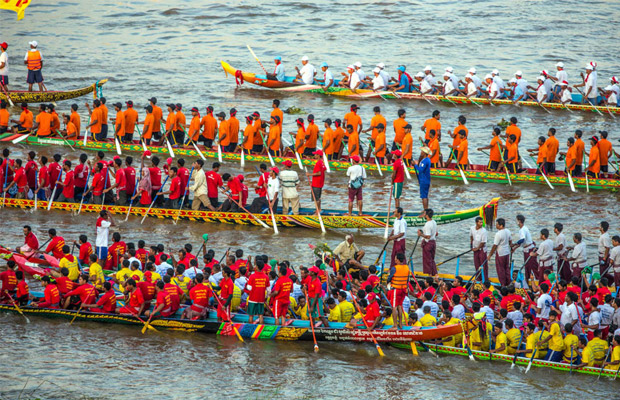
The Water Festival this year falls on November 7-9. But with Cambodia set to host the ASEAN summit and related meetings in the same week this month, the festival are not being celebrated in Phnom Penh, though some provinces have been holding celebrations since October.

Known locally as Bon Om Touk, the festival takes place in late October or early November to mark the end of the monsoon season as well as the change in flow of the Tonle Sap River.

The second day of the festival aligns with the date of the full moon on the Khmer lunar calendar month of Katdoek (or Kartika in Sanskrit), which is said to be when the long-cycle rice crop is ready for harvest.

The festival usually features dragon longboat races on its first day. Royal boat races have been held in Cambodia since at least the time of King Jayavarman VII to celebrate the victory of the Khmer navy over Cham invaders from the Champa kingdom in a large boat battle on the Tonle Sap Lake.

During the Longvek period of the 16th and 17th centuries, King Ang Chan I appointed Ponhea Yat as the “earth-guardian” in Kampuchea Krom’s Bassac district and he organised the navy into three groups to defend the region from invasion by the Da Viet kingdom under ruler Mac Dang Dung.

Kampot has a long and fascinating history, dating back to the Angkorian period when it was an important trading hub. Over time, it played a significant role in Cambodia’s maritime trade due to its strategic location near the coast.

During the French colonial era (1863–1953), Kampot became a key commercial center. The French built roads, bridges, and colonial-style buildings, many of which still stand today. The town was also famous for its high-quality Kampot pepper, which gained international recognition.

In the 1970s, during the Khmer Rouge era, Kampot, like much of Cambodia, suffered greatly. Many historical buildings were abandoned, and the region’s economy declined. However, in recent decades, Kampot has revived, becoming a top destination for travelers looking to experience its unique blend of history, nature, and culture.

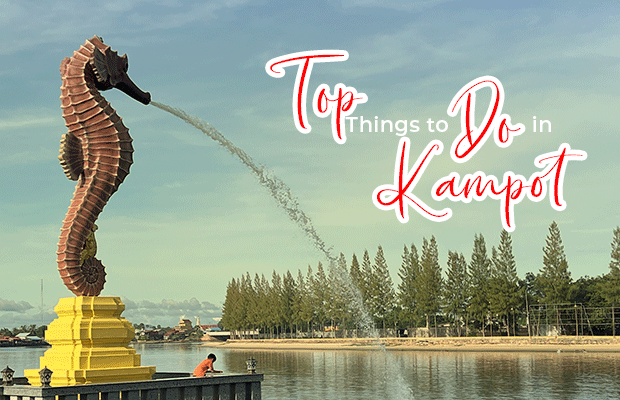
Top Things to Do in Kampot
1. Explore Bokor National Park
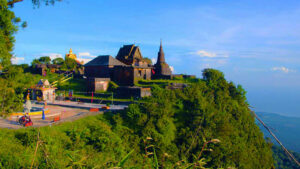
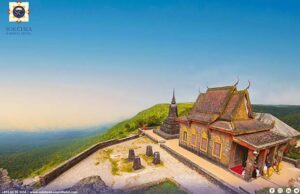
Bokor Hill Station, built by the French in the 1920s as a hill retreat, features abandoned colonial buildings, including the old Catholic church and the Bokor Palace Hotel. The park offers stunning views, waterfalls, and rich wildlife.

2. Walk Through the Old Colonial Town
Take a leisurely stroll through the old town, where you can see well-preserved French colonial buildings, such as the Kampot Provincial Hall and the Old Market.

kampot provincial museum
Kampot Provincial Museum

3. Visit a Kampot Pepper Farm
Kampot pepper, once prized by French chefs, remains a symbol of the town’s agricultural heritage. Farms like La Plantation and BoTree offer guided tours where you can see the traditional growing and harvesting process.

Kampot Pepper
Kampot Pepper

4. Take a Sunset Cruise on the Kampot River
Enjoy a relaxing boat ride along the river, where you can admire mangroves, mountains, and fireflies at night.

Sunset River Cruise in Kampot

5. Discover the Salt Fields
Kampot’s salt fields are a reminder of Cambodia’s traditional salt production methods. The best time to visit is during the dry season when workers harvest salt by hand.

Kampot Salt field
Kampot Salt field

6. Take a Day Trip to Kep
A short drive from Kampot, Kep was a popular French seaside resort in the early 20th century. Today, it’s famous for the Kep Crab Market, where you can enjoy fresh seafood.

7. Visit Phnom Chhngok Cave Temple
A fascinating cave with a 7th-century brick temple inside, Phnom Chhngok offers history and adventure in one stop.

8. Try Outdoor Activities
Kayaking or paddleboarding on the river.
Cycling through the countryside to see traditional Cambodian villages.
Tubing along the river for a relaxing afternoon.

Where to Stay in Kampot
For Comfort and Relaxation: Sokchea Kampot Hotel
A peaceful hotel with modern amenities, ideal for honeymooners, families, or those looking for a quiet retreat.
Offers a range of accommodation from Single Rooms to Family Rooms.

Sunset at Kep Beach

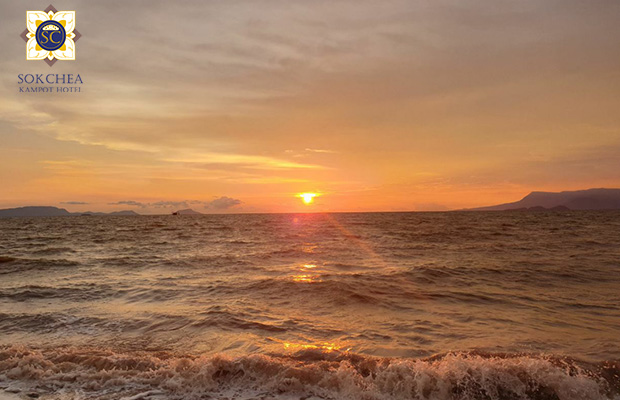
Nestled along Cambodia’s southern coast, Kep Beach is a hidden gem that offers an unparalleled experience for sunset enthusiasts. As the day begins to wane, Kep Beach transforms into a serene haven where the vibrant hues of the setting sun paint the sky and sea in a mesmerizing display.

Imagine strolling along the soft sandy shore, the gentle waves lapping at your feet as the sky transitions from the warm glow of daylight to a palette of oranges, pinks, and purples. The calm waters of the Gulf of Thailand mirror the kaleidoscope of colors, creating a breathtaking vista that feels almost surreal.

As you find your perfect spot on the beach, the sun slowly descends towards the horizon, casting a golden path across the water. The silhouette of the distant islands adds to the enchanting scene, providing a picturesque backdrop for this natural spectacle. The tranquil atmosphere is occasionally punctuated by the laughter of children playing in the distance and the soft murmur of conversations from nearby beachgoers, all captivated by the beauty unfolding before them.

Whether you’re a photographer looking to capture the perfect shot, a couple seeking a romantic moment, or a solo traveler in search of peace and reflection, the sunset at Kep Beach offers something for everyone. The experience is enhanced by the simplicity of the surroundings—no towering buildings or bustling crowds, just the pure, unspoiled beauty of nature.

As the sun finally dips below the horizon, the sky’s colors deepen and the first stars begin to twinkle, marking the end of another beautiful day in Kep. The gentle transition from day to night leaves a lingering sense of tranquility and a lasting impression, making sunset at Kep Beach an unforgettable highlight of any visit to this charming coastal town.

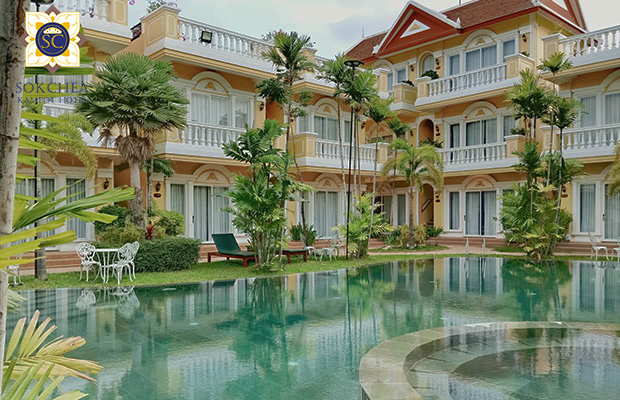
Welcome to Sokchea Kampot Hotel, where luxury meets tranquility in the heart of Kampot.

Immerse yourself in the serene ambiance of our hotel, where every detail is designed to provide you with a peaceful retreat from the hustle and bustle of daily life. Relax and unwind in our well-appointed rooms, meticulously designed to offer the utmost comfort and convenience for our guests. Take in the breathtaking views of the surrounding mountains from your private balcony, and let the tranquil ambiance of Kampot wash over you.

Rest easy knowing that modern amenities such as air conditioning, a safety deposit box, and a flat-screen TV are readily available in every room, ensuring a comfortable and enjoyable stay.

Stay connected throughout your visit with complimentary WiFi available throughout the property. Whether you’re catching up on emails or sharing your Kampot adventures with loved ones, our reliable internet service ensures you’re always connected.

Conveniently located near popular attractions such as the Kampot Provincial Museum and Kampot Train Station, our hotel makes it easy for you to explore the rich history and culture of Kampot. For those seeking outdoor adventures, the picturesque Teuk Chhou Rapids are just a short drive away, offering a refreshing escape into nature.

Whether you’re here for business or pleasure, Sokchea Kampot Hotel offers the perfect blend of luxury, comfort, and convenience for your stay in Kampot. We look forward to welcoming you and ensuring you have an unforgettable experience with us.