10 Essential Tips for First-Time Visitors to Kampot

Kampot is a peaceful riverside town in southern Cambodia, known for its relaxed lifestyle, colonial architecture, and natural surroundings. For first-time visitors, a few essential tips can help ensure a smooth and enjoyable trip.

First, plan your visit during the dry season from November to March, when the weather is cooler and ideal for sightseeing. Second, choose accommodation near the riverside or town center to easily access cafés, markets, and transportation. Third, rent a bicycle or motorbike to explore Kampot at a comfortable pace, as the town is small and easy to navigate.

Fourth, make time to visit Bokor National Park, one of Kampot’s top attractions, featuring mountain views, waterfalls, historical buildings, and the well-known Wat Sampov Pram pagoda. Fifth, enjoy a sunset river cruise to experience Kampot’s calm atmosphere and local life along the river. Sixth, try Kampot’s famous pepper by visiting a pepper farm or tasting local dishes that highlight this world-renowned product.

Seventh, dress modestly when visiting pagodas or rural areas as a sign of respect for local culture. Eighth, carry small amounts of cash since many local businesses and tuk-tuks do not accept cards. Ninth, stay hydrated and protect yourself from the sun, especially during hotter months.

Finally, slow down and embrace Kampot’s relaxed rhythm. The town is best enjoyed without rushing. By following these tips, first-time visitors can experience Kampot’s charm, culture, and natural beauty with confidence and ease.

Related Blog

អាណាចក្រខ្មែរ គឺ ជា សម័យ មួយ ដែល មាន ភាពរុងរឿង បំផុតក្នុងប្រវត្តិសាស្ត្ រជាតិខ្មែរ។ ដោយសារ ហេតុដែលខ្មែរមានដែនដីធំធេង និងវិសាលភាព យ៉ាងច្រើន អាណាចក្រខ្មែរ ត្រូវបានហៅថា “មហាអាណាចក្រខ្មែរ”។ ប្រវត្តិសាស្ត្រ របស់អាណាចក្រ នេះត្រូវបានចងក្រង និងរក្សាទុកតាមរយៈសិលាចារឹក និងសាស្ត្រាស្លឹករឹត។

សាស្ត្រាស្លឹករឹត គឺជាគម្ពីរ ឬ អត្ថបទបុរាណដែលត្រូវបានចារនៅលើស្លឹករឹត។ ស្លឹករឹតគឺជាស្លឹករបស់ដើមទ្រាំង ដែលមានប្រភពមកពីភាគខាងកើត និងខាងជើងនៃប្រទេសឥណ្ឌា និងស្រីលង្កា។ នៅក្នុងតំបន់អាស៊ីអាគ្នេយ៍ ដើមទ្រាំងនេះអាចរកឃើញនៅប្រទេសកម្ពុជា ថៃ និងភូមា។ នៅប្រទេសកម្ពុជា ដើមទ្រាំងមានច្រើននៅខេត្តក្រចេះ និងកំពង់ធំ។

សម្ដេចព្រះសង្ឃរាជ ជួនណាត បានពន្យល់ថា ពាក្យ “សាស្ត្រា” ក្នុងភាសាបាលី និងសំស្ក្រឹត មានន័យថា ក្បួនច្បាប់ ឬ សេចក្តីដឹង ដែលពាក់ពន្ធ័ទៅនឹងចំណេះដឹង វិទ្យាសាស្ត្រ សាសនា ច្បាប់ និងទ្រឹស្តីអំពីជីវិត។ អ្នកស្រាវជ្រាវខ្លះទៀតក៏បានរៀបរាប់ថា សាស្ត្រាស្លឹករឹតមានកំណើតចាប់ពីសម័យអង្គរ។

សាស្ត្រាស្លឹករឹត ត្រូវបានផ្សព្វផ្សាយដល់ប្រជាជនខ្មែរយ៉ាងទូលំទូលាយ នៅសម័យកាលមុនៗ ហើយត្រូវបានប្រើប្រាស់ជាប្រចាំ។ ប៉ុន្តែពេលកន្លងមក វប្បធម៌សិលាចារឹក និងសាស្ត្រាស្លឹករឹតក៏បានរលាយបាត់បង់បន្តិចម្តងៗ ដោយសារអវត្តមាននៃការរក្សាទុក និងការចែកចាយខ្វះខាត។

សព្វថ្ងៃ សាស្ត្រាស្លឹករឹតភាគច្រើន ត្រូវបានរក្សា និងប្រើប្រាស់នៅតែក្នុងវត្តអារាមប៉ុណ្ណោះ ដូច្នេះ វាក៏មានហានិភ័យបាត់បង់បន្តិចម្តងៗ ផងដែរ។ បណ្តាលមកពីការរីកចម្រើននៃបច្ចេកវិទ្យាទំនើប ដែលរំពឹងឱ្យប្រើសៀវភៅ ឬវិធីសាស្ត្រឌីជីថលជំនួស។

សរុបមក សាស្ត្រាស្លឹករឹតគឺជាទ្រព្យសម្បត្តិបុរាណដ៏មានតម្លៃ ដែលបង្ហាញពីភាពចម្បងនៃវប្បធម៌ និងស្មារតីដ៏ខ្ពង់ខ្ពស់របស់ជាតិខ្មែរ។ វាអាចជាគម្ពីរសាសនា ឬឯកសារដែលរៀបរាប់អំពីពង្សាវតារនៃប្រទេសខ្មែរយើងផងដែរ។

The Khmer Empire was one of the most glorious periods in Cambodian history. Due to the vast territory under Khmer control, it earned the title of the “Great Khmer Empire.” This rich history has been recorded and preserved through stone inscriptions and Sastra Slëk Rëet (palm-leaf manuscripts).

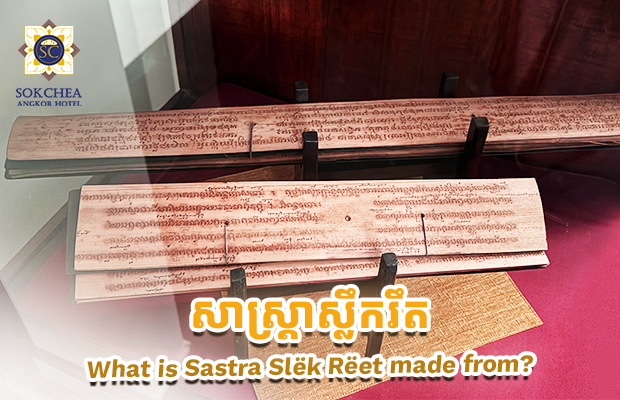
What is Sastra Slëk Rëet made from?
Sastra Slëk Rëet refers to ancient texts inscribed on palm leaves, specifically the leaves of the T’rang tree (Corypha palm). This tree originates from the eastern and northern parts of India and Sri Lanka. In Southeast Asia, the T’rang tree can be found in countries like Cambodia, Thailand, and Myanmar. In Cambodia, the tree is mostly found in Kratie and Kampong Thom provinces.

According to Samdech Preah Sangharaja Chuon Nath, the word Sastra in Pali and Sanskrit means “doctrine,” referring to knowledge, sciences, religion, law, and philosophies about life. Some scholars have stated that Sastra Slëk Rëet dates back to the Angkor period.

These palm-leaf manuscripts were widely shared among Khmer people in the past and used over many generations. However, as time went on, both the tradition of stone inscriptions and the use of palm-leaf manuscripts have gradually faded. Today, Sastra Slëk Rëet is mostly preserved and used only within Buddhist pagodas. As a result, it is slowly being lost due to the rise of modern technology such as printed books and digital formats.

In conclusion, Sastra Slëk Rëet is a valuable cultural heritage of the Khmer people. These texts, written on palm leaves, include religious scriptures and historical records that reflect the wisdom and identity of the Khmer civilization.

#at Sokchea Angkor Hotel Lobby

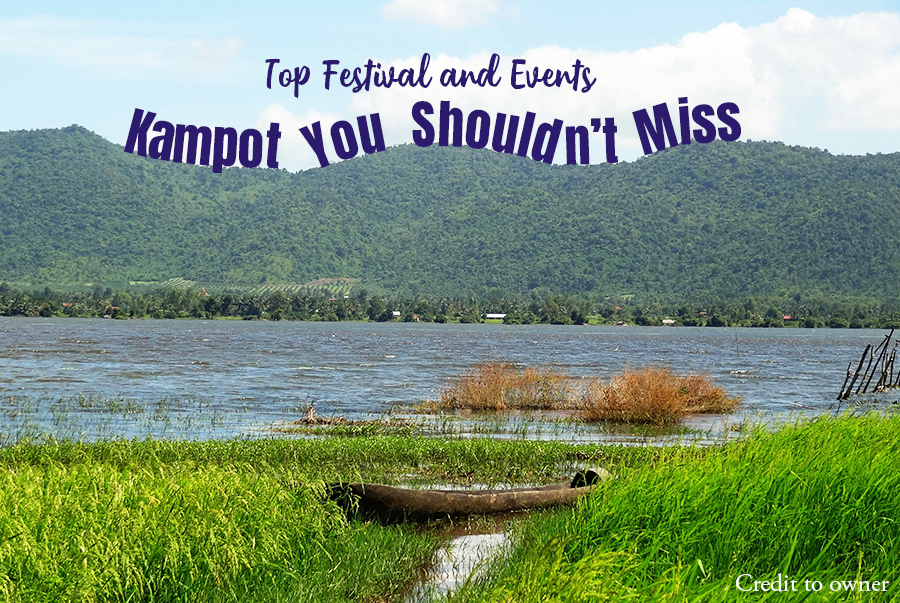
Kampot, a tranquil riverside town in southern Cambodia, is known for its colonial charm, pepper farms, and scenic mountain views. Yet beyond its relaxed atmosphere, Kampot hosts a variety of festivals and events that showcase its vibrant culture and growing creative scene. For visitors, these celebrations offer an enriching way to connect with local traditions and the community spirit.

One of the most anticipated events is the Kampot River Festival, which brings together athletes, performers, and food vendors for a lively weekend along the riverside. Featuring boat races, dance shows, and artisanal markets, the festival celebrates the province’s natural beauty and cultural diversity. Equally notable is the Cambodian Kite Festival, where traditional kites known as khleng ek fill the sky. This event highlights an important aspect of Khmer heritage while offering spectacular visuals for onlookers.

Food lovers shouldn’t miss the Kampot Pepper Festival, a tribute to the region’s world-renowned pepper. Visitors can enjoy cooking demonstrations, pepper tastings, and farm tours that reveal the spice’s journey from vine to table. Meanwhile, the Kampot Writers and Readers Festival attracts creatives from around the world, transforming the town into a hub of storytelling, music, and discussion.

Additionally, Kampot’s many music and art events, often hosted in its boutique bars and eco-resorts, provide travelers with intimate cultural experiences year-round. Whether you’re drawn to food, arts, or traditional performances, Kampot’s festivals offer a rich blend of local flavor and creativity. Attending these events will leave any visitor with unforgettable memories of Cambodia’s vibrant arts and cultural scene.

Nestled in the scenic countryside of Kampot Province, Phnom Chhngok Cave Temple offers an enchanting blend of natural wonder and ancient spirituality. This mystical limestone cave, set within a peaceful rural landscape about 12 kilometers northeast of Kampot town, is not only a geological marvel but also home to a pre-Angkorian brick temple dating back to the 7th century. As you approach the site, you’ll pass through quiet villages and rice fields before reaching the stairs that lead up the hill to the cave entrance. Inside, the cave opens into a large, shadowy chamber with dramatic stalactites and stalagmites that have formed over millions of years, some of which resemble animals and mythical creatures. The air is cool and still, and shafts of sunlight occasionally pierce through the rock, creating an otherworldly atmosphere. At the heart of the cave stands the small but remarkable brick temple dedicated to Shiva, remarkably well-preserved and considered one of the oldest Hindu sanctuaries in Cambodia. Local guides, often young villagers, are available to share legends and assist with navigating deeper sections of the cave. Some routes even lead out through narrow limestone tunnels for the adventurous. Phnom Chhngok is more than a destination—it’s an experience that combines history, mystery, and the raw beauty of nature. Whether you’re a history enthusiast, a spiritual seeker, or simply someone in search of a unique day trip in Kampot, this hidden gem offers a peaceful and unforgettable escape from the ordinary. Don’t forget to wear good walking shoes and bring a flashlight for exploring the deeper corners of the cave. A visit to Phnom Chhngok is a journey back in time—one that echoes with the stories of Cambodia’s ancient past.

Traveling from Phnom Penh to Kampot is a rewarding journey that takes you from the bustling capital city to the tranquil riverside town famous for its natural beauty and French colonial charm. The distance between Phnom Penh and Kampot is approximately 150 kilometers, and the trip usually takes between three to five hours, depending on your mode of transport.

One of the most popular and affordable ways to reach Kampot is by bus or minivan. Several transportation companies offer daily services, with air-conditioned vehicles and comfortable seating. Buses generally depart from the city center and arrive at Kampot town, providing an easy and scenic ride through the countryside. Travelers looking for more privacy and flexibility may prefer hiring a private taxi or SUV, which allows convenient stops for photos or refreshments along the way.

Another enjoyable option is traveling by train, operated by the Royal Railway of Cambodia. The train route offers a slower but more peaceful journey, showcasing rural landscapes, green fields, and mountain views. It is a unique and nostalgic experience for those who wish to travel at a relaxed pace.

For adventurous travelers, motorbike or car rental gives full freedom to explore at their own schedule, with the highway and well-paved roads making it a pleasant drive. Whether you seek comfort, adventure, or scenic beauty, every option from Phnom Penh to Kampot promises a memorable start to your stay in this charming coastal province.

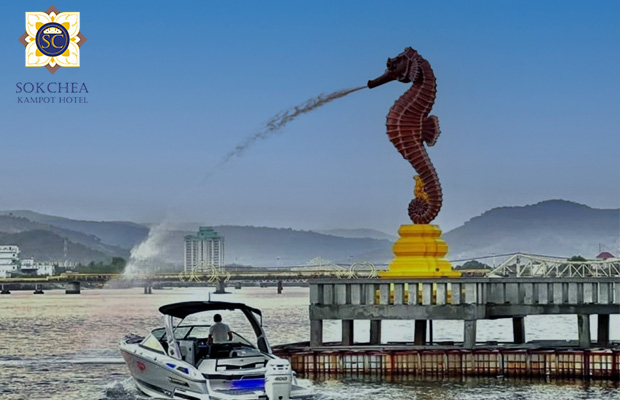
The installation of the new seahorse statue in Kampot province is indeed a wonderful addition to the beauty and charm of Kampot City. Not only does it enhance the aesthetic appeal of the area, but it also serves as a symbol of the region’s rich marine biodiversity and cultural heritage.

For tourists, the seahorse statue offers a unique photo opportunity and a memorable landmark to visit during their exploration of Kampot. Its presence highlights the importance of marine conservation and serves as a reminder of the need to protect and preserve the natural environment, including the fascinating sea creatures that inhabit it.

Moreover, the seahorse statue can play a role in raising awareness about the conservation of seahorses and other marine species among locals and visitors alike. By drawing attention to these captivating animals, it encourages people to learn more about them and to contribute to efforts aimed at their protection.

Overall, the new seahorse statue adds to the allure of Kampot City while promoting environmental stewardship and appreciation for the wonders of marine life. It serves as a beacon of conservation and a testament to the beauty and importance of our oceans and seas.

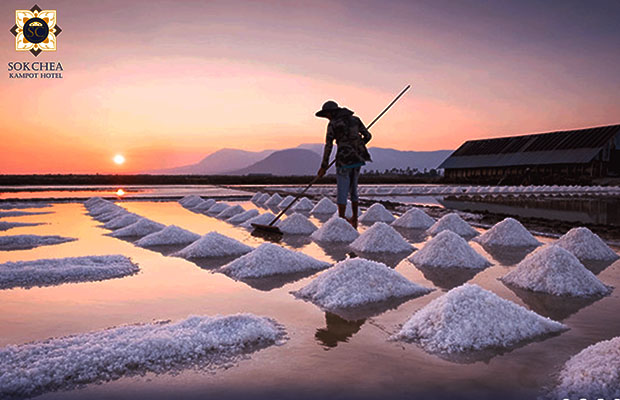
The Kampot Salt Fields are located in Kampot Province, Cambodia, near the coastal town of Kampot and the neighboring province of Kep. These salt fields are renowned for their traditional salt production methods, which have been passed down through generations.

The salt fields are typically made up of vast expanses of shallow, rectangular basins filled with seawater. The process of salt production begins during the dry season when the seawater is directed into the basins through a series of canals and channels. As the water evaporates under the hot sun, it leaves behind a layer of salt crystals on the basin’s surface.

Workers then carefully rake the salt crystals from the basins and pile them up to dry further in the sun. Once dried, the salt is collected, sorted, and packed for distribution to local markets or for export.

Visitors to the Kampot Salt Fields can observe this traditional salt-making process and learn about the significance of salt production in the region’s economy and culture. The salt fields also offer picturesque views, especially during sunrise and sunset, making them a popular destination for tourists exploring the Kampot Province. Additionally, many tours in the area include visits to the salt fields as part of their itinerary, providing visitors with insight into Cambodia’s rural life and traditional industries.